New Year, New Momentum
New Year, New Momentum: Modi’s 2025 Reforms Power India’s Next Leap
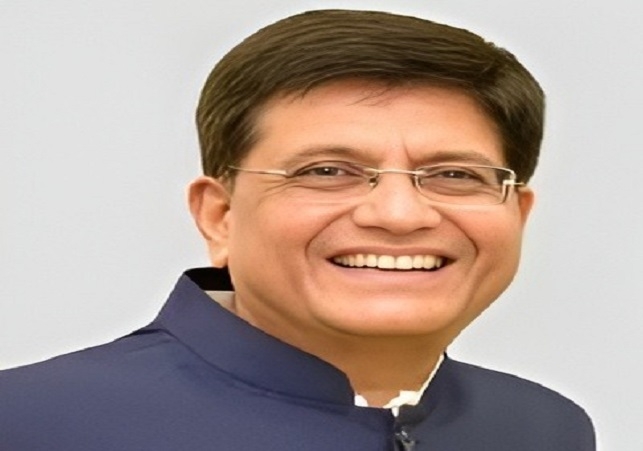
Shri Piyush Goyal
The New Year brings renewed confidence and optimism to India’s commerce and industry landscape. Decisive steps taken in 2025 are poised to accelerate trade and investment, expand global market access for small businesses and startups, create employment, and further Prime Minister Narendra Modi’s mission of promoting ease of living for every citizen.
A major initiative of the Modi government has been to promote startups. Today, India has over 2 lakh government-recognized startups. As the PM said on the 10th anniversary of Startup India, our startups are providing solutions to various problems and helping Indian economy become resilient and self-reliant.
Support for startups is a part of the Modi government’s wider strategy of accelerating economic growth to create jobs and improve the lives of every citizen, particularly the poor.
2025 was a landmark year in the transformative journey that India has been on since 2014 under the decisive leadership of Prime Minister Modi. Through bold decisions and game-changing reforms, our government has reshaped the business environment while ensuring that every policy contributes to improving the lives of citizens, especially the poorest of the poor.
India is now the focus of global attention and recognized as a reliable and trusted partner. India’s total exports rose by 6 per cent to a record USD 825.25 billion in 2024–25, maintaining growth momentum despite global uncertainty. To further support exporters, the government announced a ₹25,060 crore Export Promotion Mission.
Jan Vishwas and Ease of Doing Business
The Repealing and Amendment Act, 2025 eliminated 71 obsolete statutes, some dating back to 1886. Under the Jan Vishwas initiative, the Modi government has removed criminal provisions for numerous minor offences. These reforms enhance governance, promote ease of doing business, and ensure India’s legal framework keeps pace with a modern economy. This process will continue with hundreds of such provisions under review for more reforms this year.
During last year’s Monsoon Session of Parliament, five landmark bills related to shipping and ports were passed. These laws simplify documentation, ease dispute resolution, and significantly reduce logistics costs. On the commerce front, the Directorate General of Foreign Trade has proactively supported exporters through transparent, facilitative policies that enhance ease of doing business.
These initiatives are unshackling the entrepreneurial spirit of our traders, small businessmen and startups, who can now focus on their work instead of worrying about tedious compliance requirements and fear of imprisonment for some small violation.
FTAs and ‘Local for Global’
A guiding principle of India’s trade and investment strategy has been to champion local entrepreneurs, particularly small businesses, start-ups, farmers, and artisans; and empower them to succeed globally. In pursuit of this vision, India concluded three Free Trade Agreements (FTAs) last year, providing Indian goods duty-free access to the developed markets of the UK, New Zealand, and Oman.
The FTAs are also part of the reform process. Earlier, the UPA government had recklessly signed deals with countries that competed with India globally, ignoring national interest. The Modi government has correctly prioritised FTAs with developed countries and signed win-win deals.
These FTAs will accelerate job creation, boost investment, and unlock transformative opportunities for small businesses, students, women, farmers, and youth across India. Each agreement was negotiated after extensive stakeholder consultations, ensuring balanced outcomes and genuine win-win engagement with the developed world.
Safeguarding India’s Interests
In addition to these agreements, the FTA with the European Free Trade Association comprising Switzerland, Norway, Iceland, and Liechtenstein, which was signed in 2024, has been operationalised. A common theme across all FTAs is protection of India’s agriculture and dairy sectors, including in agreements with major global dairy exporters such as New Zealand and Australia.
Through these trade agreements, Indian exports benefit from immediate or rapid tariff elimination, while India’s own market opening remains calibrated and gradual. New Zealand has committed $USD 20 billion in foreign direct investment over the next 15 years, reflecting the innovative investment-linked provisions pioneered in India’s FTA with the EFTA countries. This investment will support agriculture, dairy, MSMEs, education, sports, and youth development, ensuring broad-based and inclusive growth.
India: A Global Investment Destination
Over the past 11 financial years up to 2024–25, India attracted USD 748 billion in foreign direct investment—around two-and-a-half times the USD 308 billion received during the preceding 11 years.
This is significant given that the Modi government inherited a mismanaged economy once labelled as one of the world’s “Fragile Five.” During the UPA era, repeated economic setbacks had led developed countries to disengage from trade talks with India. Through focused, corruption-free governance, bold reforms and fiscal discipline, PM Modi restored confidence in the Indian economy, elevating India’s stature as a preferred destination for trade and investment.
Reforms to help the poor. India closed 2025 on a high note, becoming the world’s fourth-largest economy by overtaking Japan, and is firmly on track to surpass Germany. Importantly, unlike the UPA era, economic gains have reached the poorest, particularly in rural India.
To increase the benefits for workers, The Modi government has undertaken historic labour reforms, merging 29 fragmented laws into four modern codes. The focus is on fair wages, timely payments, social security and safety. They will also ensure greater female participation in the workforce.
Every Indian citizen has gained from the GST reforms that have created a clean two-slab structure. This will ease the burden on households, MSMEs, farmers and labour-intensive sectors.
The Road Ahead
The year 2025 was one of bridge-building: between domestic enterprise and global demand; between policy reform and digital empowerment; and between emerging small businesses and international markets.
There is much more excitement ahead. A panel led by Niti Aayog member Rajiv Gauba is studying a wide spectrum of reforms. This will further accelerate PM Modi’s Reform Express. As India moves forward, it has a clear vision to build a Viksit Bharat through competitive trade, innovative industry, and a resilient economy that is confident and self-reliant. The success of India’s exporters, manufacturers, farmers, and service providers is the success of the nation itself.
India is not just preparing for the future. It is shaping it. With decisive leadership, bold reforms, and a clear global strategy, the country’s ambition is backed by action. As India trades, builds, innovates and engages with the world, it does so on its own terms as strong, self-reliant, and trusted country.
Related News
.jpg)